


FROM SWIMMING POOL TO OPEN WATER: HOW TO TAKE THE PLUNGE
30.04.26
Making the jump from a brightly lit, lane‑roped swimming pool to open water can feel daunting for many triathletes and swimmers. But open water swimming offers something special: beautiful locations, a sense of freedom, and a refreshing challenge. At Castle Race Series, we’ve chosen venues with some of the most stunning open water swim spots across the UK, Ireland and France.
Whether you’re preparing to race with us or simply looking for a way to begin your open water swimming journey, the following tips will help you find your confidence and step out of your comfort zone.
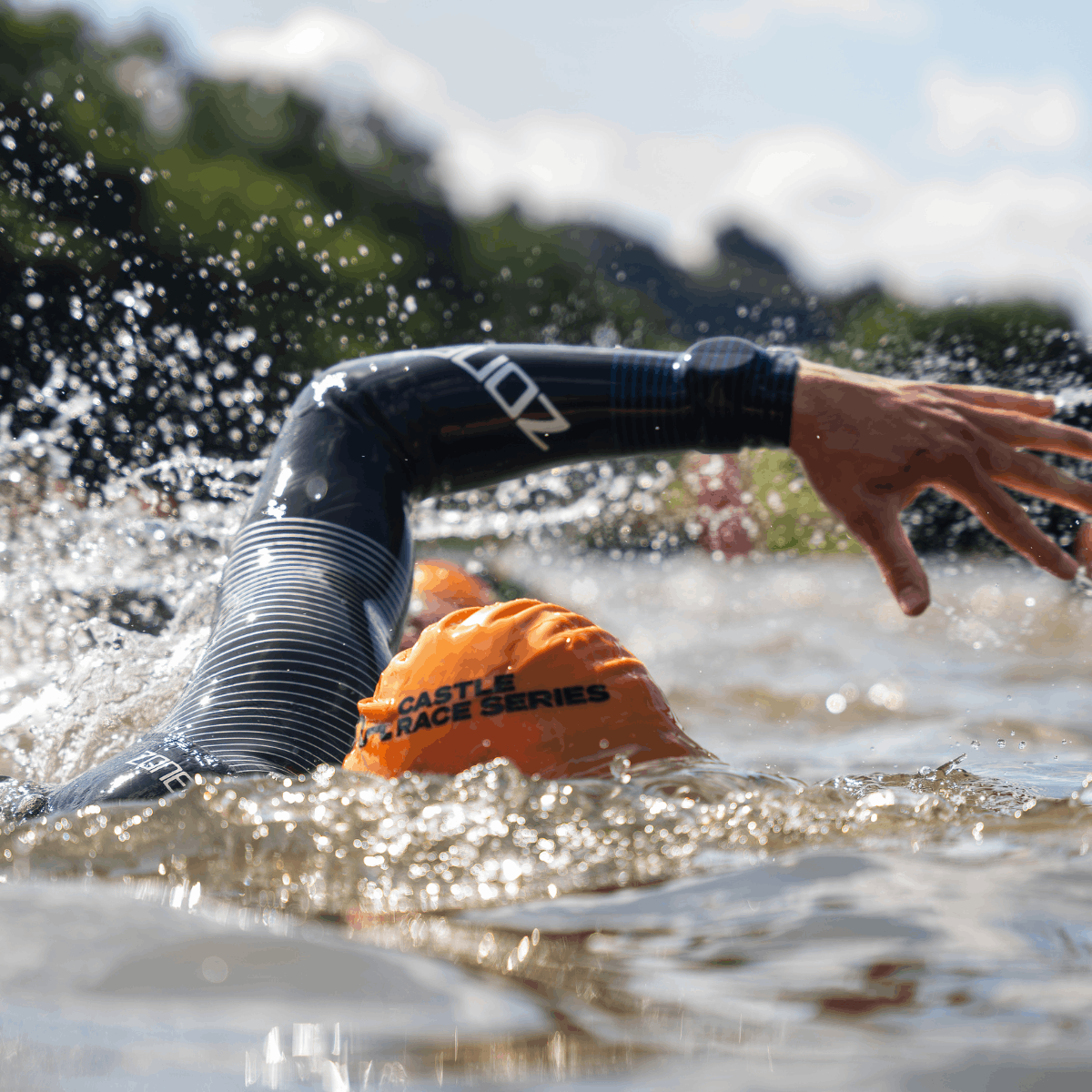
WHEN SHOULD YOU START OPEN WATER SWIMMING?
The short answer: now. There’s never a wrong time to begin (aside from the middle of winter). Whatever your age, gender or experience, it’s never too late. If you’re a confident pool swimmer, open water swimming is a liberating way to build fitness and enjoy the outdoors.
Water temperature is a key factor to consider and many organisations set minimum temperatures for safe swimming. You can find out more about wetsuit requirements here.
WHAT DO I NEED TO SWIM SAFELY IN OPEN WATER?
Most open‑water venues require basic safety gear: a wetsuit (mandatory below 15.9°C at British Triathlon–sanctioned races), a bright swim cap, and a tow float for visibility.
Many venues offer wetsuit and tow‑float hire, and at Castle Race Series events we provide wetsuit hire and full kayak safety cover, so tow floats aren’t needed during races. You can find our preparation page here.
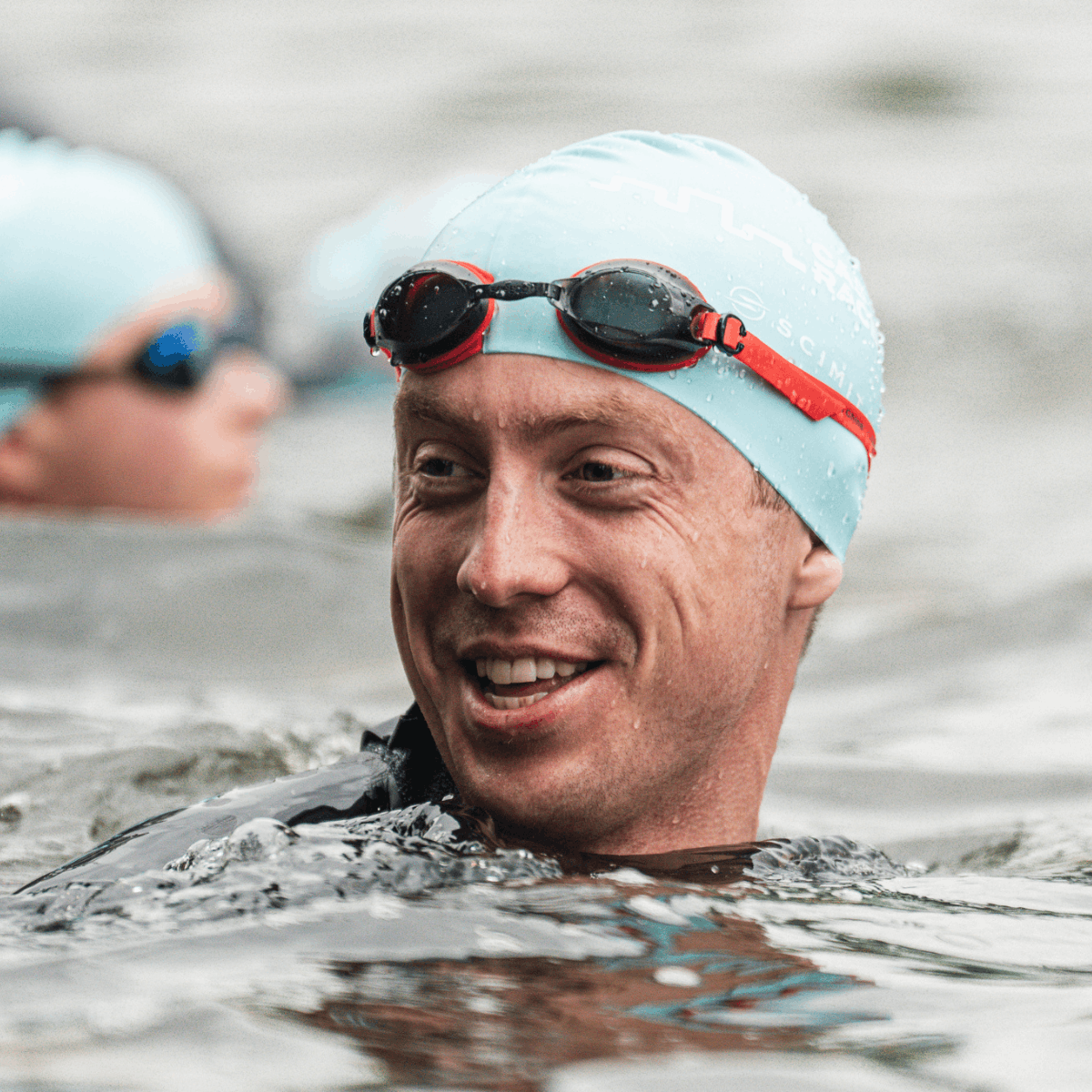
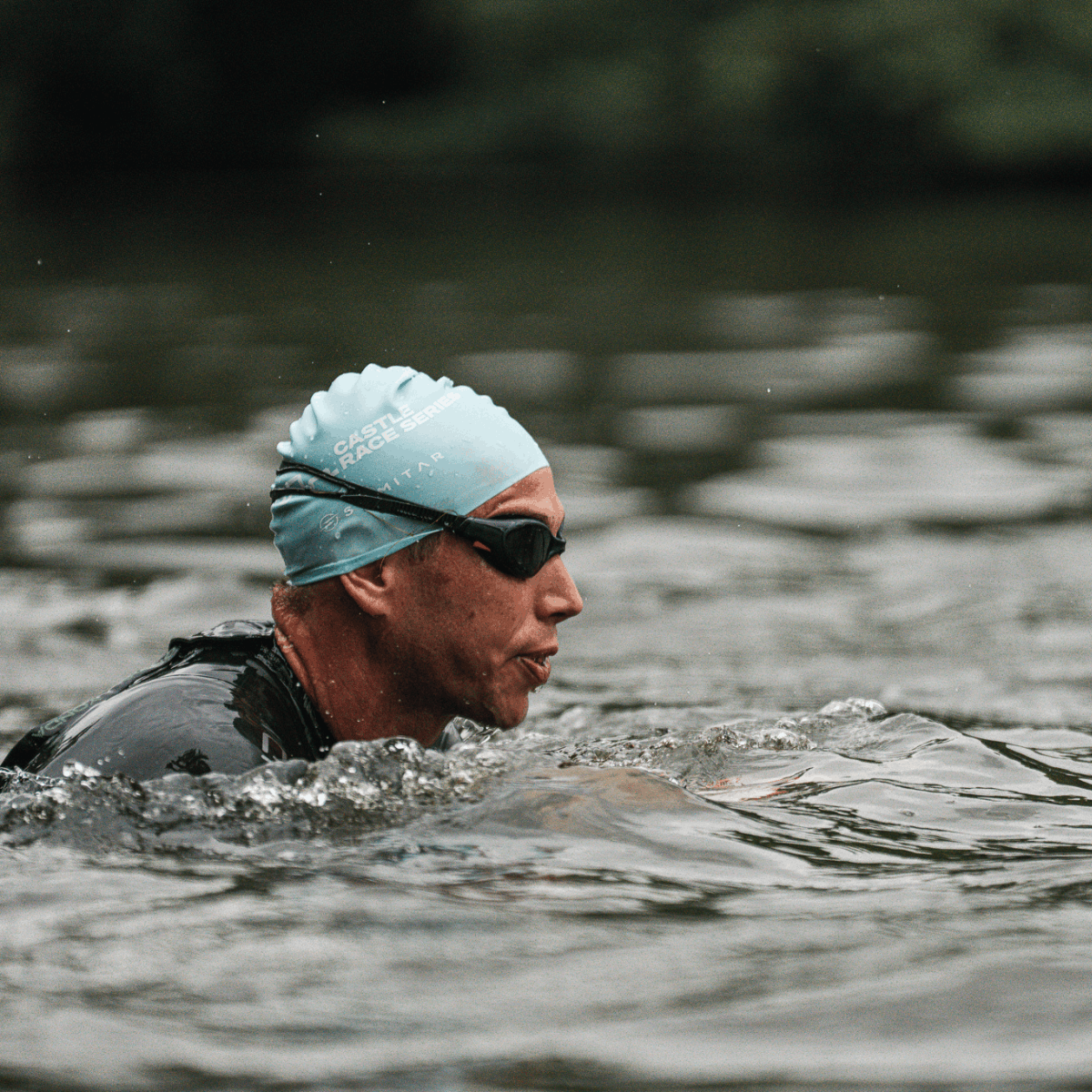
ADJUSTING YOUR TECHNIQUE
Without lane ropes or tiles to guide you, it’s easy to drift off course. To stay on track:
- Look up regularly: Lift your eyes forward every few strokes to spot buoys or landmarks.
- Breathe more often if you feel disoriented.
- Know your route before you enter the water.
If you need a break, roll onto your back and float. Raise your hand if you need assistance from a lifeguard.
WHERE CAN I PRACTICE OPEN WATER SWIMMING?
There are lots of places around our events where you can practice open water swimming ahead of your race.
Here are some recommended organised open water swimming venues near our Castle Race Series locations. We also run taster sessions on race weekends with TriTraining Harder.
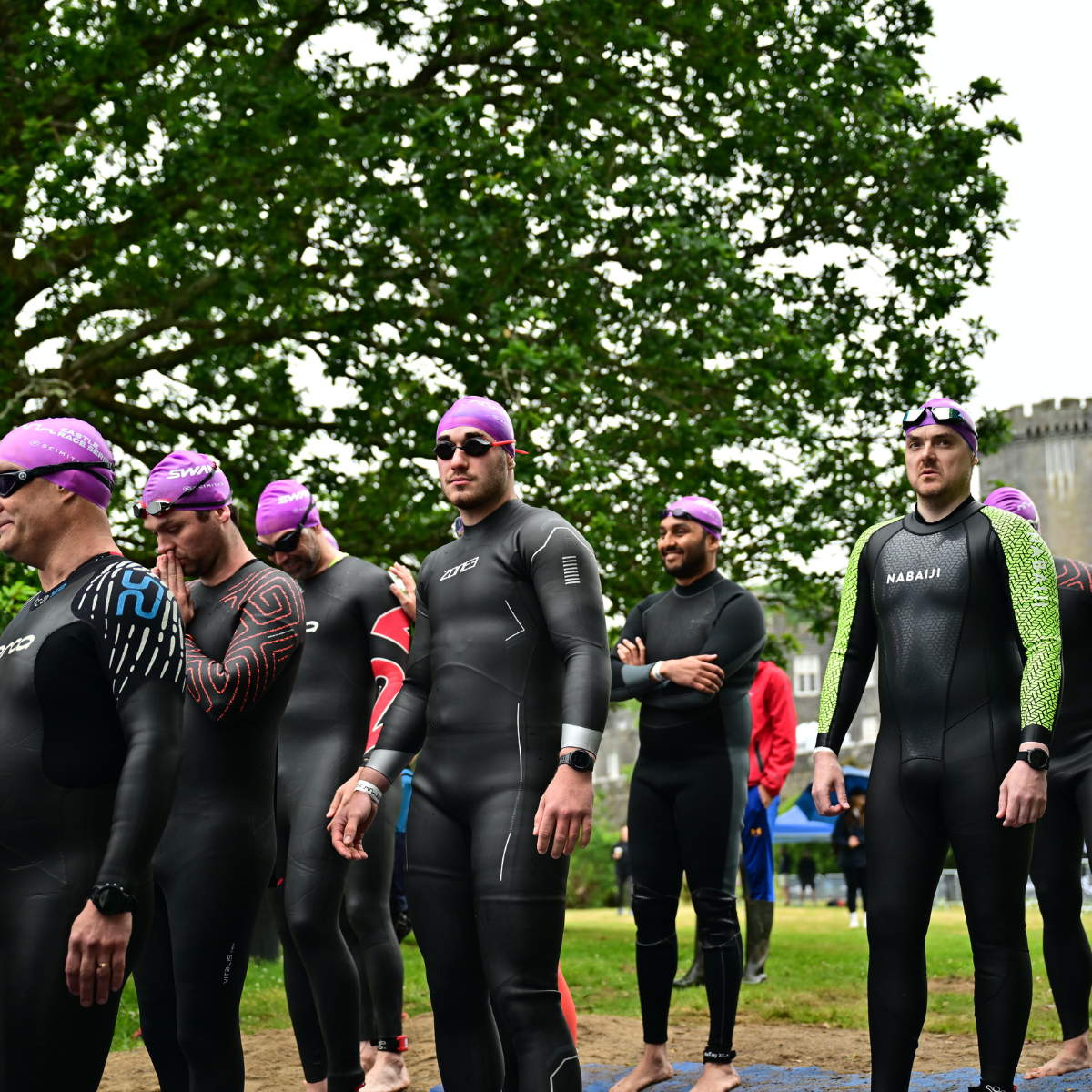
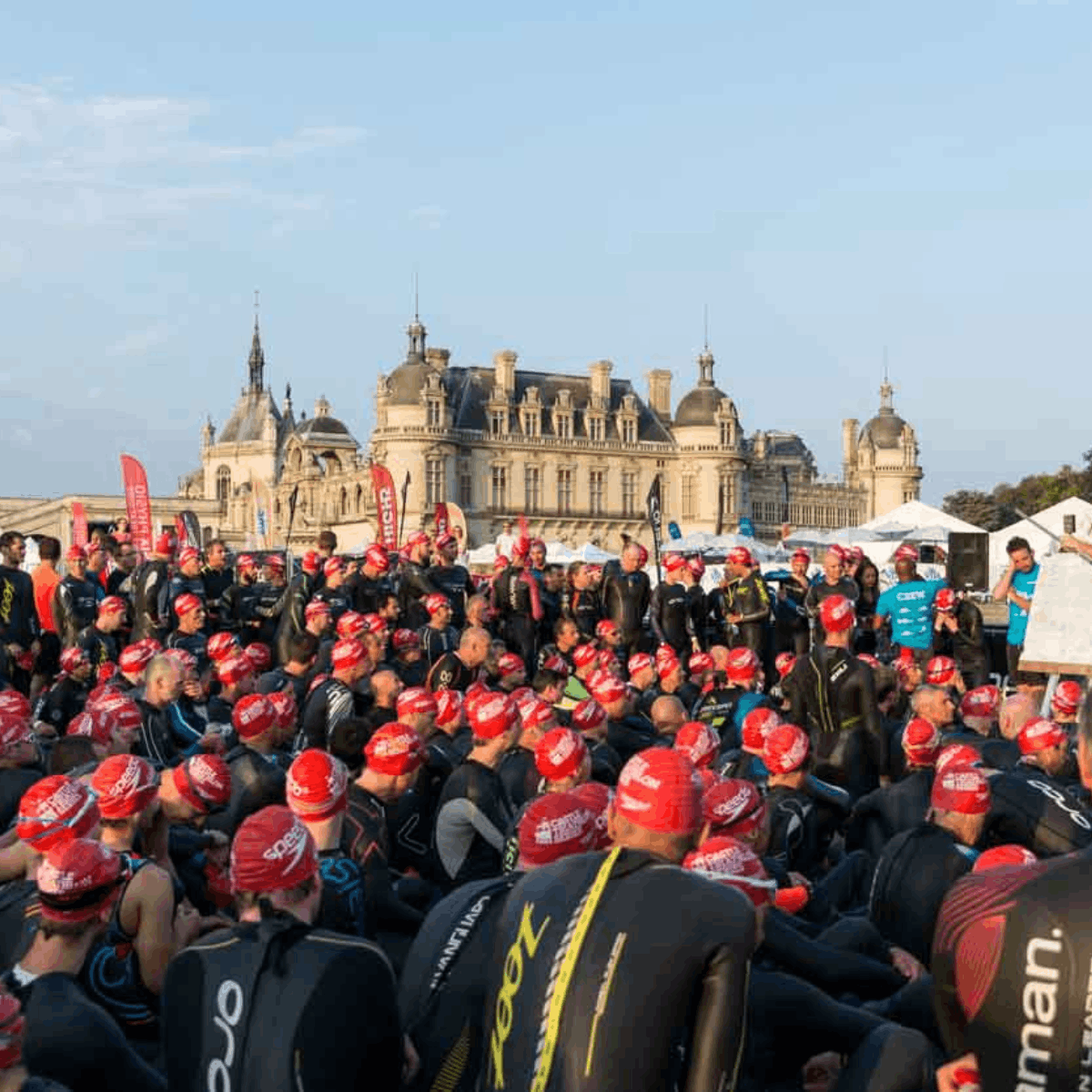
Lough Cutra
Galway, Ireland
Blackrock Diving Tower, Galway
https://www.galwaytri.ie/swimming/
Galway Tri Club runs open water sessions on Wednesday evenings throughout summer, with distance markers, kayak support and lifeguards. They also offer a Beginner Open Water Programme in April/May.
Château de Chantilly
Chantilly, France
Paris Aquatique, Multiple locations
https://www.parisaquatique.fr/content/section-eau-libre
Paris Aquatique offers coached open water training near Paris, rotating between venues depending on water conditions and availability. The programme is aimed at confident swimmers who want to develop endurance.
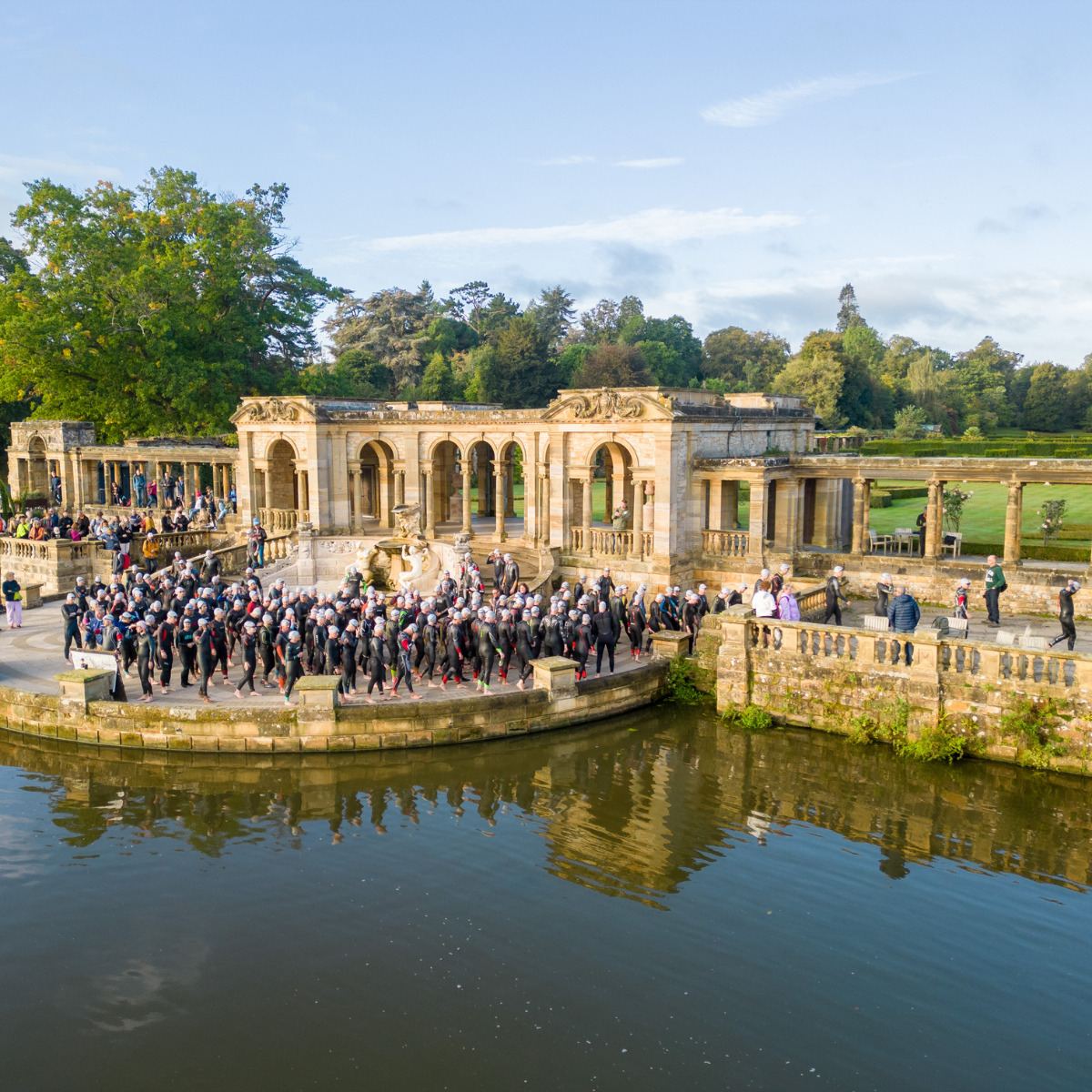
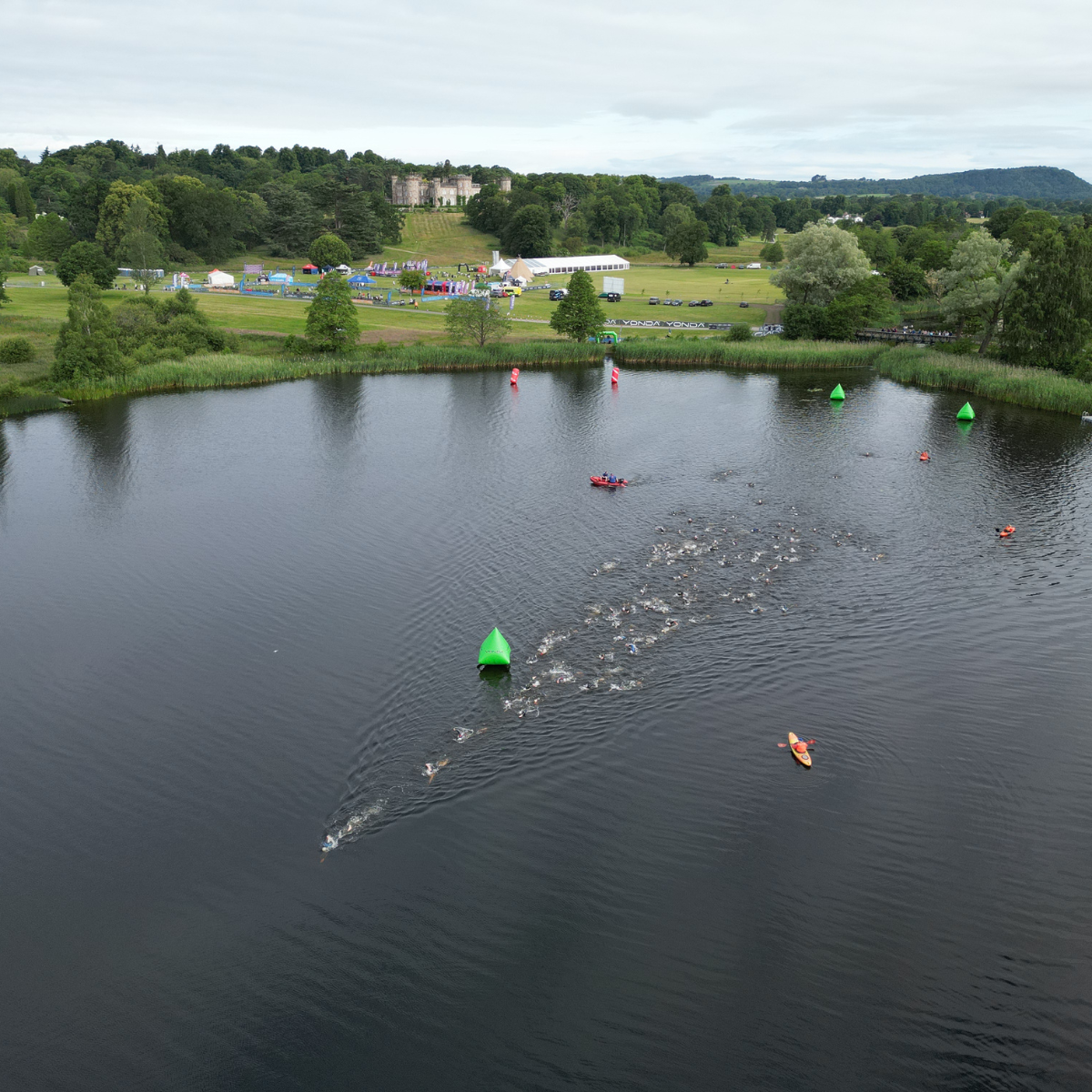
Cholmondeley Castle
Cheshire
Manley Mere, Cheshire
https://www.manleymere.co.uk/open-water-swimming/
A well‑managed lake with 250m, 500m and 750m loops (shortened in winter). Safety cover is provided.
Belvoir Castle
Leicestershire
Race Hub, Leicestershire
Just 20 minutes from Belvoir. Open year‑round and suitable for all abilities, from beginners to elite athletes. Regular water quality checks, safety cover, free parking and an on‑site café.
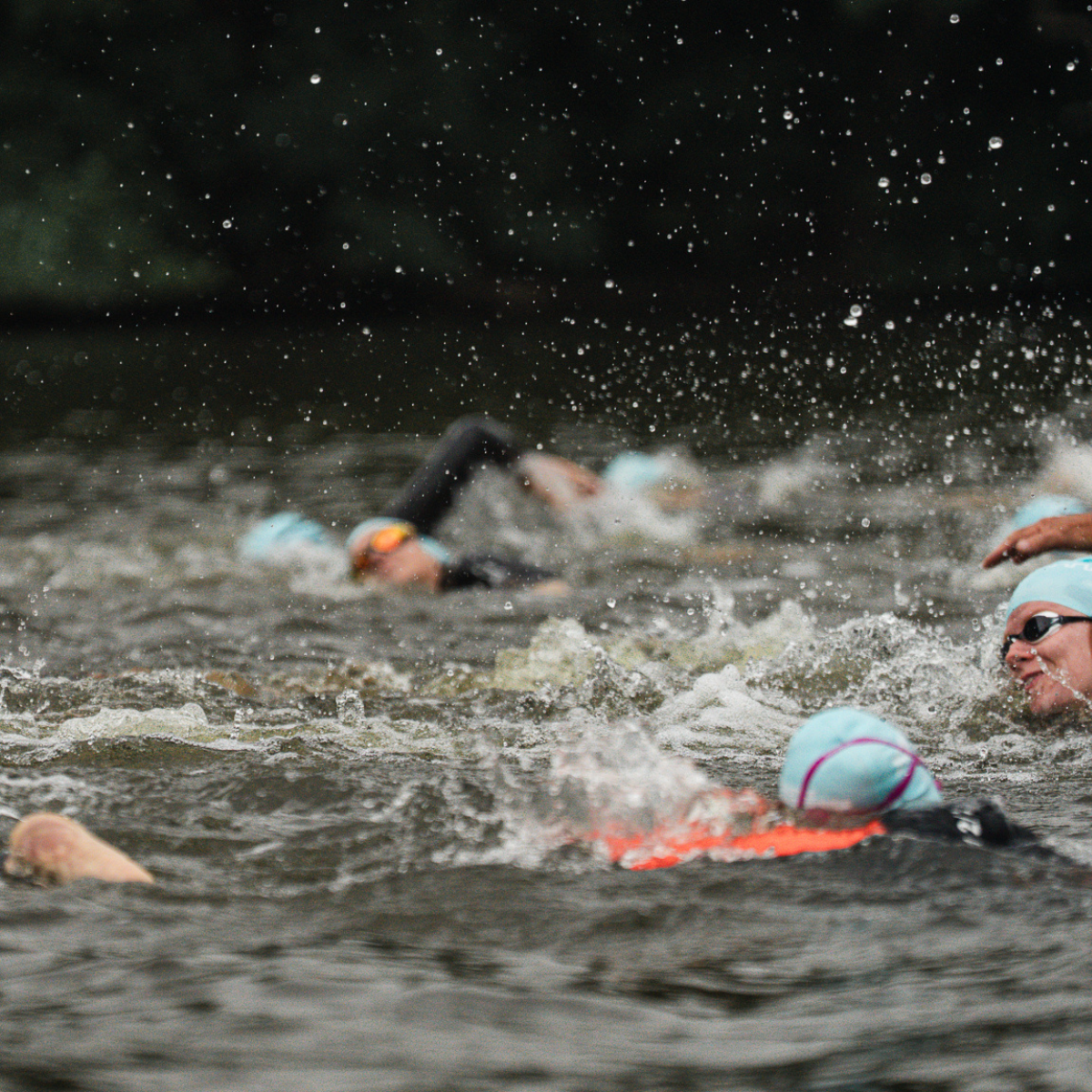
Hever Castle
Kent
Diver’s Cover Godstone, Surrey
A beautiful man‑made quarry dedicated to open water swimming, with lifeguards and bookable hourly sessions.
Penshurst Place, Kent
https://www.triswim.org.uk/product/penshurst-place/
TriSwim offers peaceful lake sessions within the grounds of Penshurst Place, plus a Tour, Tea & Swim package combining a house or garden tour with afternoon tea and a refreshing swim.
WILD SWIMMING ACCESS AND LAW
If you prefer to find your own swim spots, make sure you understand the legalities and safety considerations. This website outlines where wild swimming is permitted and safe, here.
If you choose to swim in wild, un-manned locations:
- Never swim alone — take a friend
- Respect nature and leave no trace
- Bring the correct safety equipment
- Check water quality, currents and access rights
Whatever you choose, stay safe and enjoy!
DIVE IN! SIGN UP TO OUR NEWSLETTER
Keep up to date with exclusive discounts, launches and news.